Kaptah
Not the thing
That proves to bloodless machines
We are, indeed, human
But a character in
A novel so sad
With beauty,
The sting, the agony of tragedy
He is not the hero
Not a villain
For a foil
He exists, and his motivation
Is self-interest,
Which is to say, he’s like us
A common man
Is he common woman?
Early on, he is a servant,
And he steals enough to keep his job
While his hiding places are secure
The protagonist forgets
About him in the midst of terror
And sadness for the state
And for one’s own
A common man
Is he a common woman?
One day, when few surprises remain,
Kaptah is found, fat and wealthy
Lording it over his own
All is otherwise destruction
And reimagined chaos
For certain things go on
Only on the next generation’s form
He doesn’t care
He has his own
Glamour, glitz, tastelessness of
Rococo (not rococo itself)
He is fashionably grotesque
(relation to the living is not
coincidental)
There is a promise that comes across
While reading as
Demon-mischief, say,
To those who want to co-create a better world
That Kaptah will endure
Enjoy the excesses of each day
To die in bed one day
Surrounded, if not
Barricaded,
By many wealthy status-things
He might know the illusion
And the lesson
Again, he will not care
For he is the common man
Is he the common woman,
I don’t know
C L Couch
The Egyptian by Mika Waltari
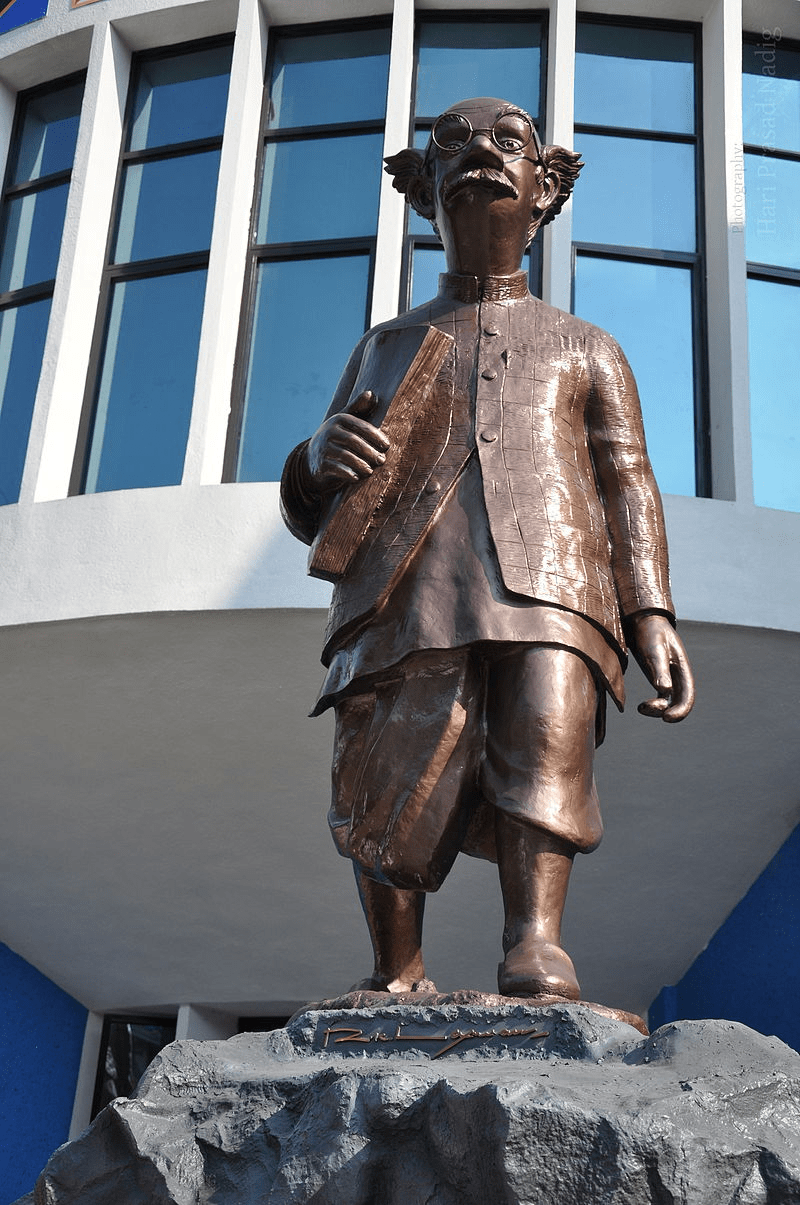
The Common Man by R K Laxman at Symbiosis Institute, Pune.
Hari Prasad Nadig – https://www.flickr.com/photos/hpnadig/5537675936, CC BY-SA 2.0, https://commons.wikimedia.org/w/index.php?curid=38047206


 clcouch123
Leave a comment