(x = space)
x
x
The Garden of Scheherazade
x
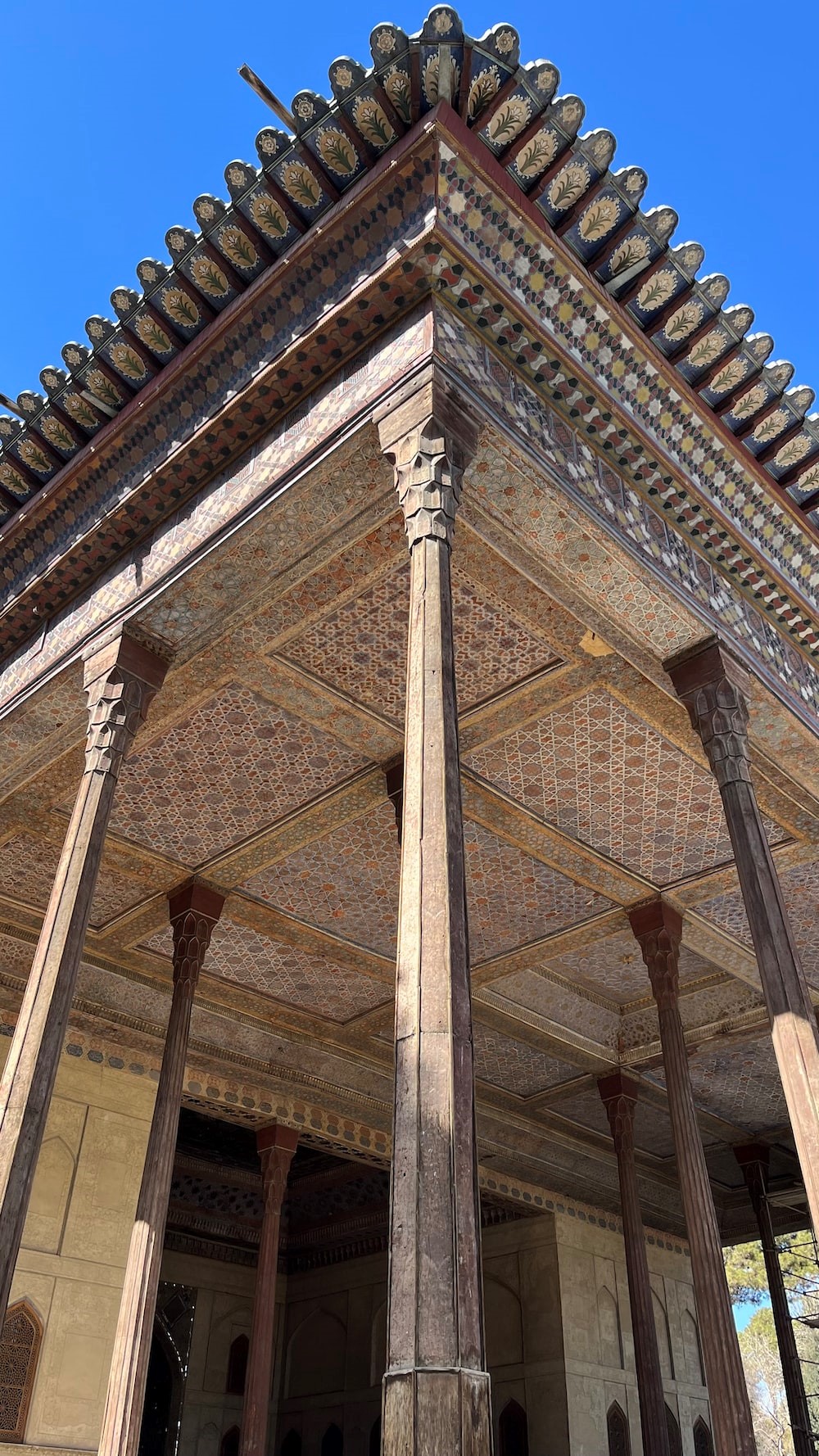
Imagine
An Arabian portico
A ceiling to the side
Under which is
Furniture with pillows
It is day
Then it is night
And in another place
Deeper inside
She meets with the husband
She volunteered to take
Even though
He is a maniac
Who kills after one night
To secure fidelity
x
And so you tell a story
Recalling all the things you studied
Texts
Everything told you
By your father the vizier
By his advisors
Students
The servants of the house
And when allowed to wander
(covered up)
Making stories out of comments made
Along the streets
Of a desert country
With oases
And mountains
As well
x
Legends
Narratives from
Math and philosophy
The history of men
(mostly men
aware of audience)
Through the ages
Sinbad
Aladdin
Ali Baba
So many more
Nearly three years’ worth
x
Though it was the first night
That mattered
And the day that followed
Keeping life
By keeping the killer
Entertained
And then the second night
Made all the difference
And the third
x
While you stood
Or sat
Or walked
The garden outside
The blood-filled palace
Deciding
Crafting
Revising
Each narrative
For the night
Aiming for salvation
For another day
x
coda
x
I don’t know why I think of this
x
It
She
Came to me yesterday
Probably because
I was thinking about story
On its own
Not so much the content
But the abstract
And the purpose
The importance
The reality
A telling makes
x
Maybe not
To life and limb
Bur all the stories she got to tell
We got to hear
That were in context
So much fighting
For her life
x
C L Couch
x
x
A Thousand and One Arabian Nights is a collection framed by the telling of stories by Scheherazade, the daughter of the vizier. She volunteered against her father’s wish, naturally enough, to marry the king as a defensive measure for the women of the realm—and because the realm was losing all its women, at least those suitable for a king to marry. Whatever suitable means, especially given the circumstances. And as an overarching cause because the king whose first wife cheated on him and was summarily executed made in the king an attitude of mania regarding fidelity. And so each day he would marry a virgin and then each night have her killed. Scheherazade, who was not only skilled in storytelling but in story content, went to the king, married him, and entertained him on the first night with a story and then, because he wanted more, on the second night and so on. The king found good stories more enticing than slaying wives, which I guess is some kind of virtue even in one we can’t overall admire. Finally, the king’s madness broke or something like that happened; and he thought to keep Scheherazade as his one (and lasting) wife.
Well, it’s a story within stories. Or I should say without. But it adds an edge in the telling and our hearing. An added edge like that of a sword, perhaps that of an executioner.
x
Photo by Arsalan Rad on Unsplash
x








 clcouch123
Recent Comments