I am trying the “Verse” option in WordPress, because in part I think I should; and at least I miss having to type Xes for spaces.  I’m not sure how it’s going; I’m not sure what you receive, even though I proofread graphically as well.  I’ll keep trying.  Thanks for reading.


Tollers


Yesterday

His birthday

The day before

My brother’s

For who shall be

My brother

Well

My brother

Though I could meet

Him

In the Bird and Baby

As in a pub

He met

With Dracula

(a good story

that)

And I shall send a card

To my brother

Through electrons

And there shall be

Good wishing

In a meeting

With him

Too

That may

Or may not happen

Though we know

We can’t see

Tollers

Save on pages

And having seen

His son

Once

At a conference

At which I read

A paper

About riddles


C L Couch


notes


Henry V, Act IV, Scene 3.18 ff

John Ronald Reuel Tolkien, 3 January 1892 – 2 September 1973

Steven Eric Couch, 2 January

Photo by Tarik Haiga on Unsplash [kind of mixing up Tolkien’s use of dragons with the Year of the Dragon approaching]

(x = space)
x
x
Gospel According to the Birds
x
Books are wonderful
Black tracks across the page
Birds to say
There’s something here
Someone inked our talons
And we have walked on lines
Somehow
And there’s a message
Someone overheard a gospel
Before we were
Put back on our branches
Ancient pens
And when we’re gone
Our larger feathers go to humans
Who are
Surprised by grace
To leave a message
Whispers of angels
Like the ones who took their wings
To guide us
In our flights across the page
x
They take the credit
Though we guess it is their story
More than ours
We need to messages
No gospels
We emerge into life
Knowing how to fly
How to listen to impulses
The small glories
We would never hide
Or cease in all our starts and stops
From praising the creator
You can hear us
Humans
Our song is perfect
Without lessons
Or egos
Or prevarications
x
We could say praise us
In our stories
We know better
Without knowing
We fly
We sing
We know
God loves us
x
x
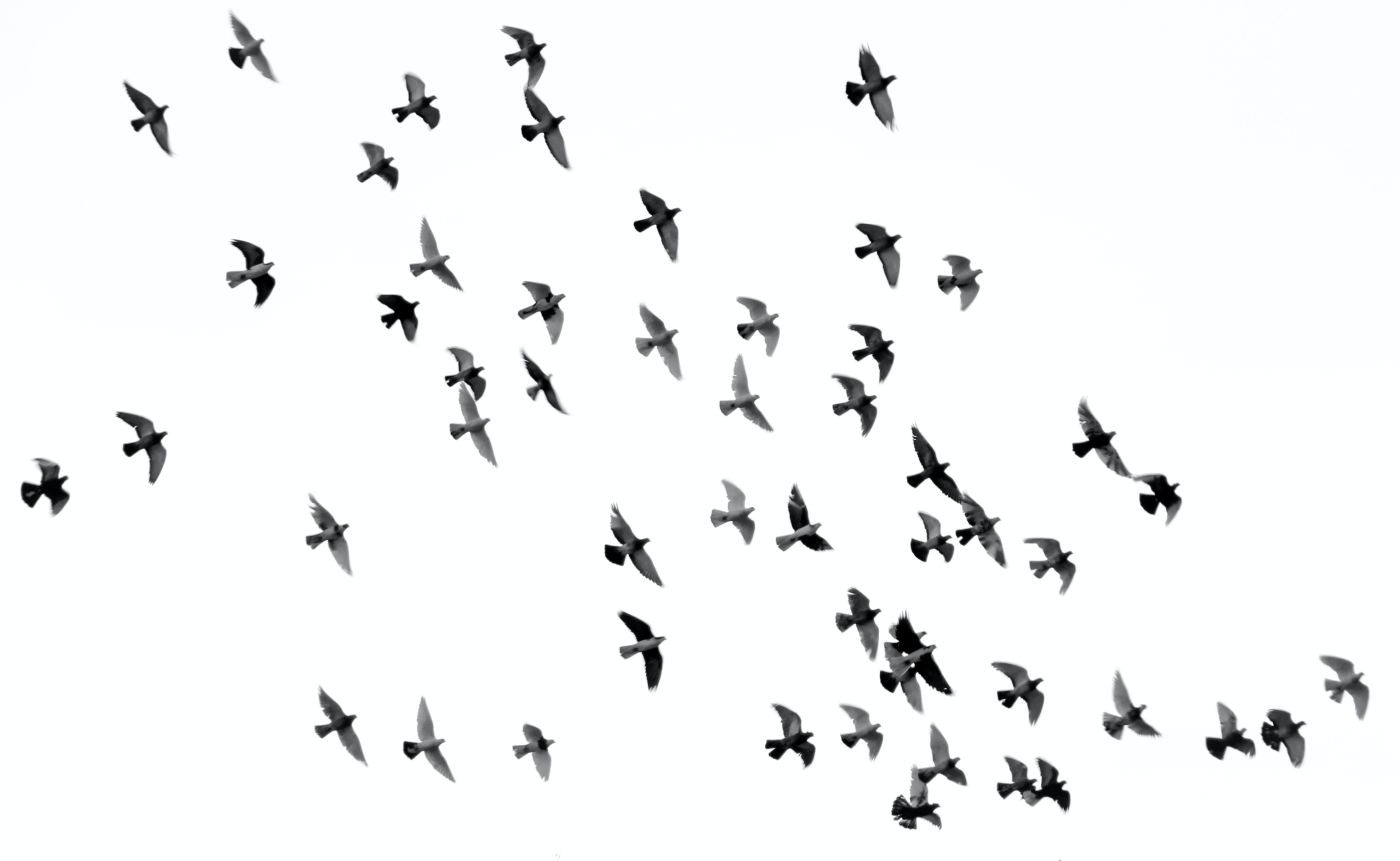
What is made by birds walking across skin that has a third opportunity?
The answer is a page whose words resemble tracks upon vellum made by animals once alive, whose skin is stretched for a second chance at life, so to say, bearing a story now to offer life for a third time, especially if the story be a gospel.
This is the kind of riddle that literate medieval people enjoyed together, literate meaning mostly monks, the kind who kept texts that had not been destroyed in the fall, thus saving what was left and what could feed into new nourishing, again to say, mostly in Europe a new civilization
The birds talking is not typical back then but my idea now. And Aesop. And Aristophanes.
Sorry, teacher can’t stop chirping.
Old English riddles are found in The Exeter Book, a volume discovered that had served as a coaster and something for impatience to glide a knife into (or why anyone would drive a knife into, along a book). A not-hiding glory to be plainly found, opened, and discovered.
x
Photo by Mehdi Sepehri on Unsplash
x
Riddles in the Anglo-Saxon Way
solutions
1, house
2, key
3, sky
4, cat
5, ghost
6, love
(in response to yesterday’s post—questions? be in touch, please)
 clcouch123
Recent Comments